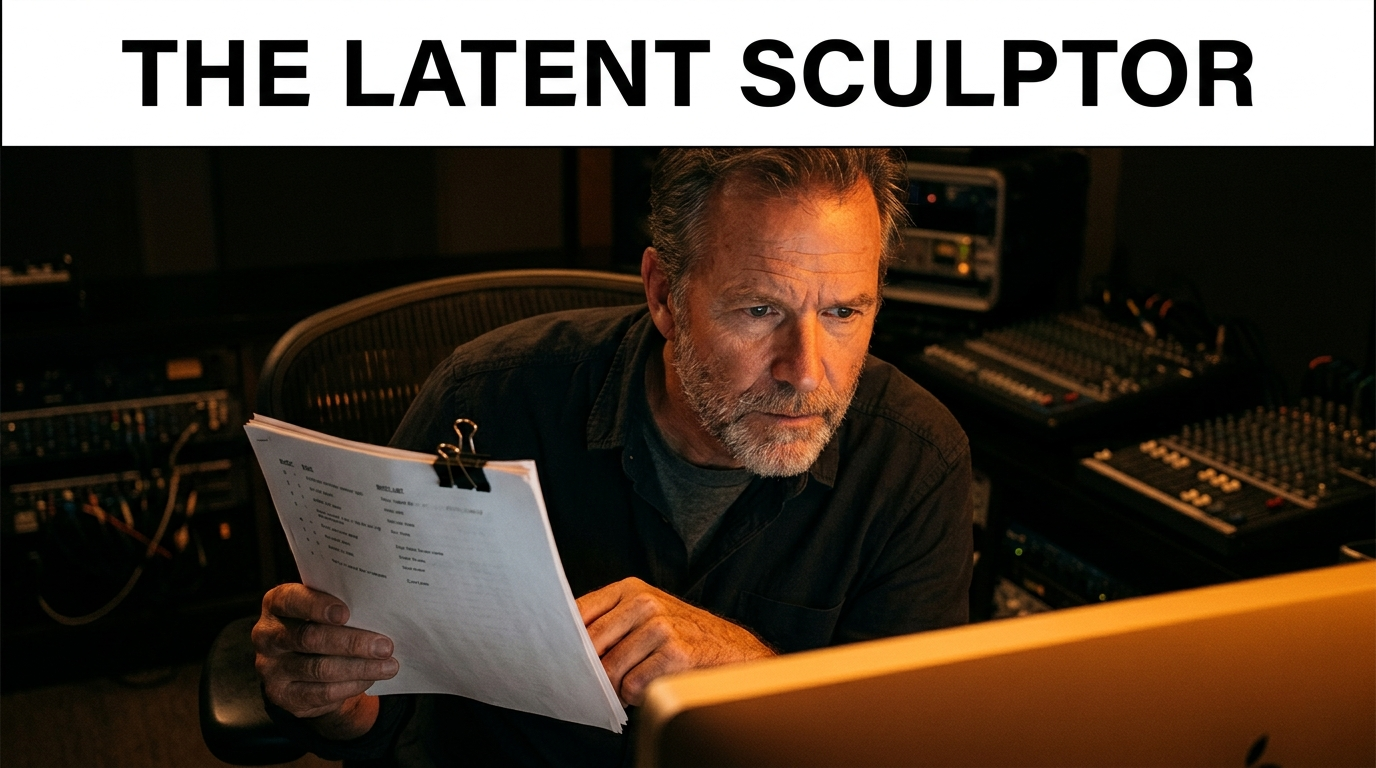
The Illusion of the Finished File
The most expensive misunderstanding in the current AI video market is the belief that a prompt produces a finished commercial.
It does not.
What comes out of a 2026 generation engine, even a very strong one, is not a campaign asset. It is not a polished advertisement. It is not a broadcast-ready narrative unit. It is a synthetic rush. Sometimes it is beautiful. Sometimes it is startlingly cinematic. Sometimes it gives a brand team a dangerous burst of false confidence because the first frame looks expensive. But a pristine opening image is not the same thing as a finished piece of persuasion.
That confusion matters because it distorts where the real value lives. Brands are still speaking about prompting as if it were the main event, as if the text box were the creative act and the output file were the product. That is backward. The prompt is a trigger. The output is raw material. The commercial is built later, by human hands, on the timeline.
AI video engines are exceptionally good at manufacturing fragments. They can generate atmosphere, movement, facial expression, lens language, lighting moods, and increasingly impressive native sound. What they cannot reliably do is think like an editor. They do not understand narrative weight. They do not understand when a moment has emotionally landed. They do not understand the exact frame where credibility begins to leak out of the image. They create possibility, not finality.
Sculpting Around the Collapse
This is why serious AI post-production is not cleanup work. It is the actual act of filmmaking.
Every generated shot has a point of collapse. That is the truth clients need to understand before they misprice the medium. The collapse may come at the hand movement, where the fingers deform for two frames. It may arrive in the eyes, where emotional coherence suddenly turns vacant. It may happen in the walk cycle, in the cloth physics, in the lip sync, or in the background architecture that quietly starts breathing like a hallucination. The shot looks convincing, until it does not.
A professional editor works around that collapse with the same ruthlessness that traditional editors have always brought to flawed footage. The skill is not merely finding the best clip. The skill is identifying the precise lifespan of the illusion, then cutting one beat before the magic breaks. That might mean cutting on motion to hide a character drift. It might mean using a directional camera move to bridge into the next fragment. It might mean trimming the tail of a shot where the model begins to unravel, then using sound to create the feeling of continuity the image itself could not sustain.
This is not a workaround in the cheap sense. It is craft.
The most experienced editors in AI filmmaking are not embarrassed by the fact that the shot fails after a few seconds. They plan for it. They build around it. They understand that the generative engine is giving them high-potential clay, not marble. Their job is sculpture. They are shaving away instability, hiding fractures, and preserving only the usable emotional truth inside the rush.
That is where lesser AI work exposes itself immediately. Amateur output tends to overstay every shot. It holds too long because the creator is still hypnotized by the novelty of generation. They want to admire the clip instead of interrogating it. But audiences do not reward novelty for long. The human eye catches falseness faster than most creators realize. One second too late on the cut, and the premium illusion becomes digital slippage. The difference between elegant and cheap is often three frames.
The Weight of Sound
Then there is sound, which is where many AI-first productions still fall apart.
Yes, native generated audio has improved dramatically. Yes, some engines now produce dialogue, environmental sound, and rough acoustic texture that would have seemed absurdly advanced not long ago. None of that means the output is emotionally finished. Raw audio is not sound design. A generated room tone is not a mix. A plausible voice is not a performance shaped for persuasion.
Sound is where weight enters the frame. It is where a commercial stops feeling like a visual demo and starts feeling like an intentional piece of communication. The editor, or the post team around the editor, has to decide what the audience hears, when they hear it, and what emotional instruction that sound is carrying. Dialogue must be balanced for clarity. Ambience must create a believable spatial bed. Silence must be used with discipline. Music must not simply sit underneath the image, it must govern tension, release, expectation, and memorability.
Without that layer of human control, AI footage often feels hollow. The image may be glossy, but the emotional body is missing. The spot floats instead of landing. It has surface and no gravity.
The Architecture of Emotion
CMOs should care about this because brands are not buying synthetic motion. They are buying emotional architecture. That architecture is built through sequencing, contrast, rhythm, and restraint. None of those things happen automatically because a model generated pretty frames.
Pacing is the clearest example. A machine can produce a close-up of a face. It cannot reliably determine how long that face should remain on screen to create desire, discomfort, confidence, or relief in a viewer. It does not know when a fast cut becomes energizing and when it becomes noise. It does not understand that comedy often requires one brutal early cut, while luxury often requires one extra breath of visual confidence. Those decisions belong to an editor because pacing is not a technical setting. It is a psychological instrument.
The timeline is where fragments become intention. One shot is exposition. Another becomes tension. A third becomes payoff. Their individual quality matters, but their arrangement matters more. The editor decides where the viewer looks, when the viewer feels, and how the message accumulates. This is why the claim that AI will replace editing has always misunderstood what editing is. Editing is not assembly. Editing is judgment under pressure.
The True Product
The brutal truth is simple: AI video has made cameras cheaper, not storytelling automatic.
That distinction is exactly why serious brands still need serious post-production. They need people who know how to cut on the collapse, shape sound into impact, and impose human rhythm on synthetic material. They need editors who are not intoxicated by the tool, but fluent in its failure points. They need storytellers who can turn disconnected eight-second miracles into a coherent, persuasive emotional system.
A serious creative team does not sell AI generation as a standalone trick. It sells directed, edited, and refined storytelling built from generative cameras. That is the real product. The tools evolved. The timeline did not disappear. And the necessity of the human eye remains decisive.